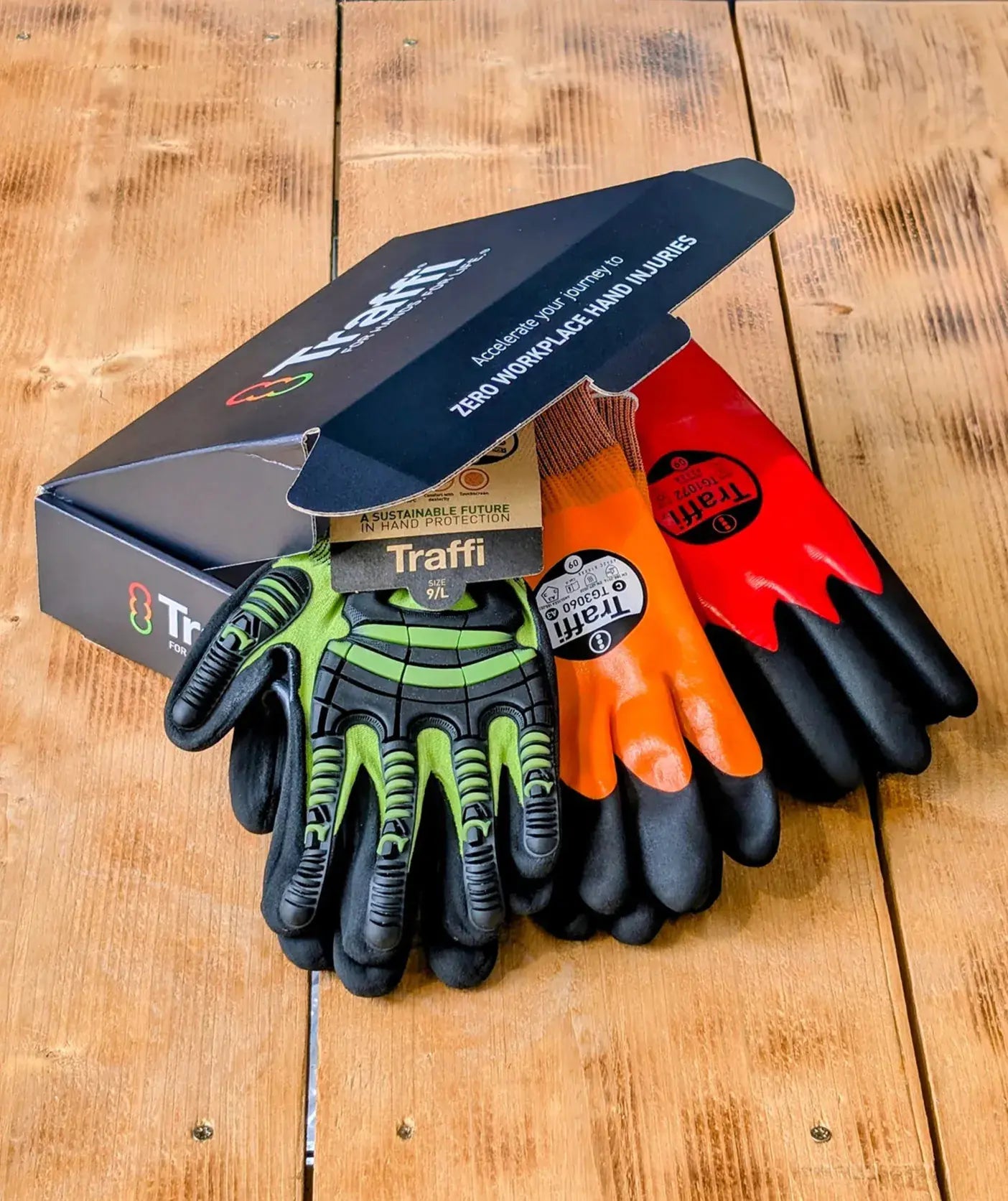
In the UK, 37% of reported non-fatal workplace injuries affect the fingers, hands, wrists or arms, with 67% of these injuries keeping the employee out of work for more than seven days.*
*Source: NimbleFins, Workplace Injury Statistics UK 2026
Take a look at some of the types of hand injuries and how they can be prevented by wearing the correct protection.
WARNING: GRAPHIC CONTENT BELOW
MINOR CUTS

Minor cuts to the fingers or hands are the most frequent type of injury and can occur in a number of ways.
This engineer cut his finger on the edge of a bolt head on a faulty air-conditioning unit. The cut was small and required minimal first aid, but even minor cuts cause pain to the employee and lost time to the employer.
To help protect against small cuts and abrasions, supply Cut Level A gloves. Tested to withstand 2 Newtons of force, Cut Level A gloves are best suited to low-risk tasks such as:
- General handling
- Warehouse work
- Assembly line duties
- Certain light construction applications
Explore our Cut Level A Gloves
BURNS

In some workplaces, employees handle very hot components, creating a risk of burns if the correct protection is not worn. Burn severity varies depending on the situation, but many burn injuries can result in scarring and lasting physical effects.
Hand protection for these tasks should be certified to EN 407, the standard for gloves tested against thermal risk.
View our EN 407 Certified Gloves
DEEP CUTS

When deeper cuts occur, the repercussions can be more serious.
This subcontractor was stripping cable insulation for connection in a control box using a fixed-bladed knife. When the knife slipped, the subcontractor cut deeply into their thumb, requiring hospital treatment.
The higher the cut risk, the higher the protection level your gloves should have. For higher-risk tasks such as this, we recommend Cut Level D or above.
Read how the TraffiSystem® makes it easy to identify the cut protection your gloves offer.
LACERATIONS

Cut risk doesn't always stop at the fingers and hands, often extending to the wrists and forearms too.
This contractor was carrying large sheets of metal that required balancing them on their wrist. As the metal moved, it sliced into their wrist, causing a laceration that required stitches and time off work.
Choose gloves with an extended cuff, such as the TG5150, or add a cut-resistant sleeve, such as the TGSL1, for additional coverage when wrists and forearms need protecting.
SLICED FINGERS
 Sliced fingers can cause long-lasting repercussions for both the individual and the business.
This operative got their finger caught in a heavy automotive battery and sliced through the skin on their middle finger, resulting in a loss of dexterity and extended time out of work.
When the risk to hands is significant, a high level of cut protection is needed.
Explore our Cut Level F Gloves
HAND INJURIES ARE PREVENTABLE
The examples above may seem extreme, but just one moment of dropped concentration, the wrong hand protection, or no hand protection at all, can lead to long-lasting consequences for an individual's health. They can also disrupt daily operations and cost businesses significantly.
Hand injuries are preventable with the right protection in place.
Contact our specialists today to assess your operations and ensure your teams are equipped with the right level of protection.