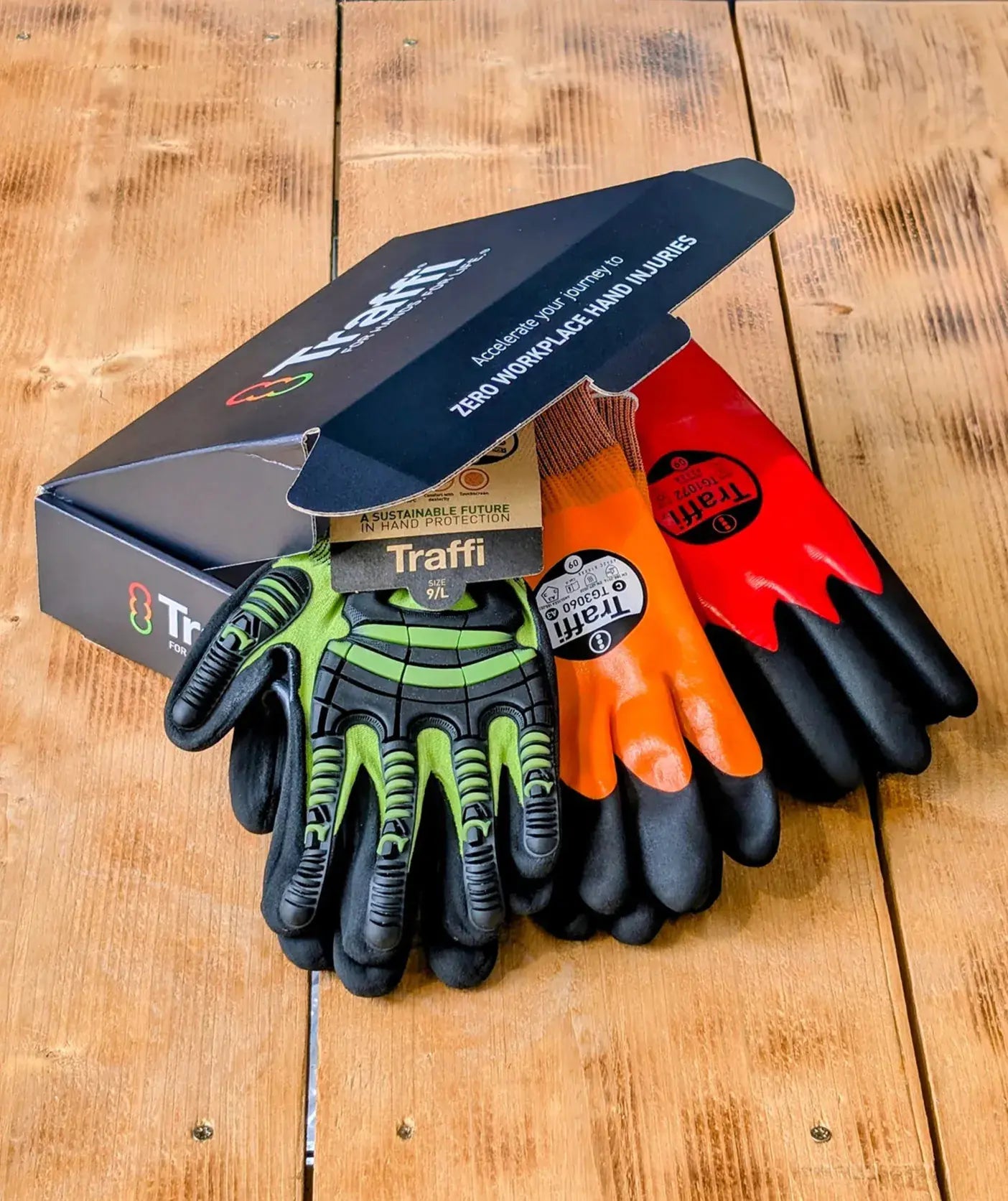
IMPACT GLOVES FOR HIGH-RISK WORKING ENVIRONMENTS
In high-risk environments, hand injuries are often caused by impact, crushing, and heavy mechanical hazards.
Traffi’s range of impact gloves is designed to help you protect workers from these risks while maintaining grip, durability, and control in demanding conditions.
Whether you are selecting gloves for specific tasks or reviewing safety across your operations, you can use this page to identify the right impact-resistant gloves for your environment.


These risks typically include:
Crushing and pinch points
Heavy object handling
Tool-related impact
Contact with moving machinery
Without the right protection, these hazards can lead to serious hand injuries that affect both safety and productivity. Impact gloves are designed to absorb and deflect force, helping reduce the severity of these injuries in real working conditions.
HOW IMPACT-RESISTANT GLOVES PROTECT YOUR HANDS
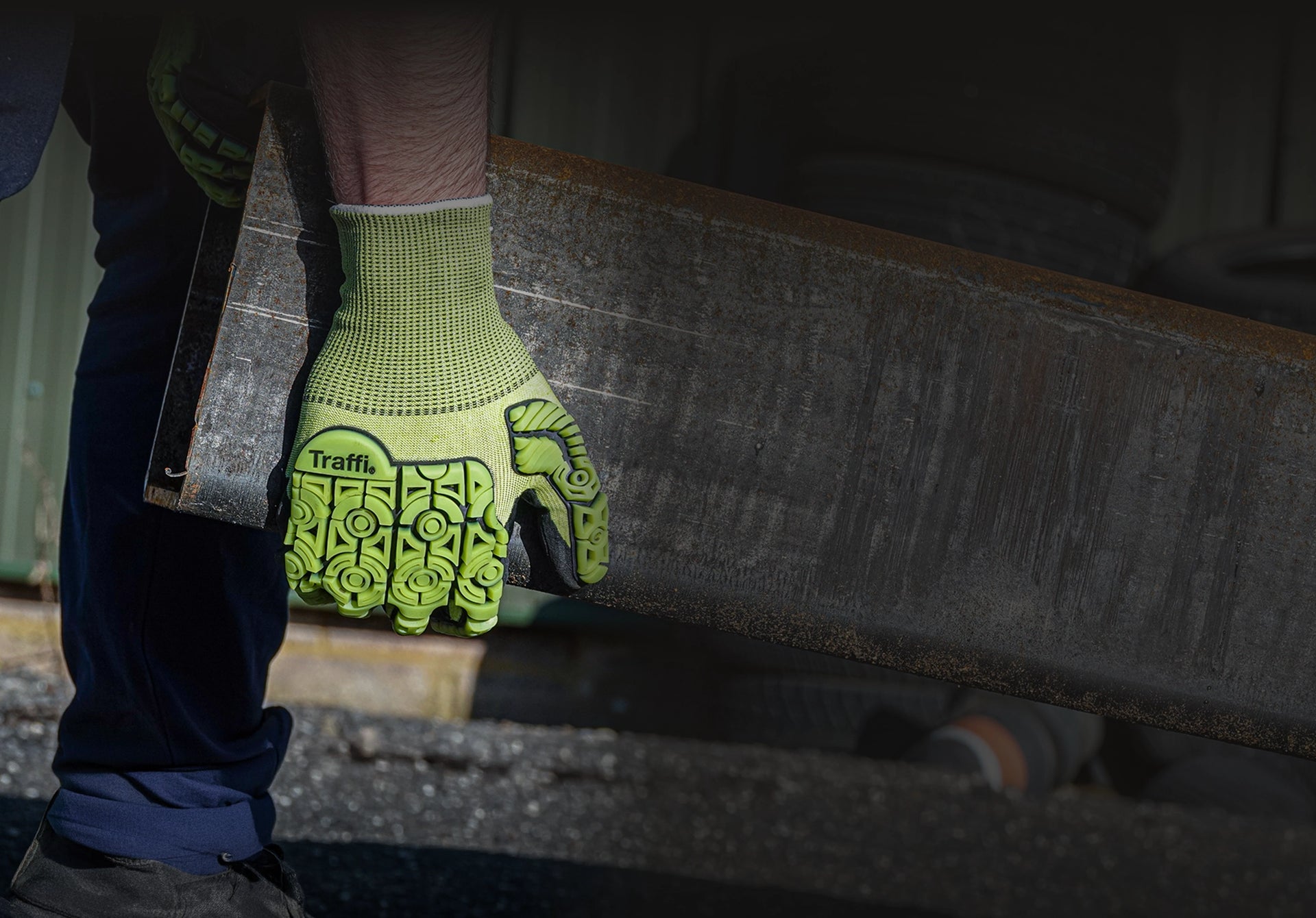
Impact-resistant gloves are built with reinforced protection zones that help absorb energy and reduce force transfer.
These zones are typically located across:
- The knuckles
- The back of the hand
- The fingers
The design allows protection where it is needed most, while maintaining flexibility so workers can still perform tasks effectively.

MATCHING IMPACT GLOVES TO HIGH-RISK TASKS
Impact protection becomes critical when tasks expose hands to force, pressure, or moving equipment. In practice, this usually means looking at how the work is carried out, not just the environment. You’re likely to need impact gloves where:

Hands are exposed to heavy or shifting materials

Tools or equipment create direct contact with force

There is a risk of pinch points or crushing

Work takes place near moving machinery or components
In these situations, standard hand protection may not be enough.
Impact-resistant gloves provide targeted protection where injuries are most likely to occur, without restricting movement or control. These risks are commonly found in industries such as construction, utilities, heavy engineering, and oil and gas.
A FOCUSED RANGE FOR IMPACT PROTECTION
When you are dealing with impact risk, more choice doesn’t always mean better outcomes.
What matters is selecting a glove that is built for the task.
Traffi’s approach focuses on a smaller number of proven solutions, designed for high-risk applications where durability, protection, and usability all need to work together.
Instead of working through a broad range, you can concentrate on gloves that are designed to perform in specific conditions, making selection quicker and more consistent.
HELPING YOU SUPPORT CUSTOMER REQUIREMENTS
When your customers are working in high-risk environments, the expectation is clear: the glove needs to perform.
That means understanding not just the product, but how it will be used.
This page gives you a practical way to:
- Match impact gloves to real applications
- explain protection features in a way that makes sense
- support trials before full rollout
- guide customers towards confident decisions
It helps you move from supplying products to supporting safer ways of working.


FIND THE RIGHT IMPACT GLOVES FOR YOUR APPLICATION
When impact risk is part of the job, selecting the right glove is critical to protecting your workforce and maintaining performance on site.
By matching gloves to the task and testing them in real conditions, you can reduce injury risk and ensure consistent protection across your teams.
Take the next step by exploring the range or requesting samples for evaluation.
FREQUENTLY ASKED QUESTIONS
Prefer to talk?
If you would rather discuss things directly, you can speak with our team.
Impact gloves are designed to protect your hands from injuries caused by force, crushing, or contact with tools and equipment. They typically include reinforced areas across the back of the hand, knuckles, and fingers to absorb and deflect impact. These gloves are commonly used in environments where hands are exposed to heavy materials, moving machinery, or high-risk manual tasks.
Impact-resistant gloves should be used when there is a risk of hands being struck, crushed, or caught between objects. This includes tasks such as handling heavy materials, working with tools, or operating near moving equipment. If the risk involves force or pressure rather than sharp edges, impact protection is likely to be required.
Impact gloves are designed to protect against force and crushing injuries, while cut-resistant gloves are designed to protect against sharp materials. The two address different types of risk. In some environments, both hazards may be present, so selecting gloves that provide the appropriate type of protection for the task is essential.
Impact gloves use reinforced protection zones, typically made from materials that absorb and disperse force. These are placed across high-risk areas such as the knuckles and fingers. When impact occurs, the design helps reduce the amount of force transferred to the hand, lowering the risk and severity of injury while still allowing movement and control.
No. Impact gloves are designed for specific high-risk applications and may not be suitable for all tasks. In some cases, the added protection can reduce dexterity or flexibility. The key is to use impact gloves where there is a genuine risk of force or crushing, and select alternative gloves where other types of protection are more appropriate.
Impact gloves are commonly used in industries where heavy-duty tasks are carried out, such as construction, utilities, heavy engineering, and oil and gas. In these environments, workers are often exposed to tools, materials, and equipment that create impact or crush risks, making this type of protection essential.
Choosing the right impact gloves starts with understanding the task and the type of risk involved. You should consider where impact is likely to occur, how frequently exposure happens, and what level of flexibility is required. From there, you can compare gloves based on protection zones, materials, and performance. Testing gloves in real working conditions is often the most effective way to confirm suitability.
Yes. When used correctly, impact gloves can reduce the severity of injuries caused by force, crushing, or contact with equipment. Their effectiveness depends on selecting the right glove for the task and ensuring consistent use. Gloves that are comfortable and practical are more likely to be worn, which plays a key role in improving safety outcomes.
Impact gloves are designed to balance protection with usability, but the level of flexibility and comfort can vary depending on the design. In some cases, added protection may slightly reduce dexterity. This is why it is important to select gloves that are appropriate for the task and trial them in real working conditions to ensure they can be used effectively.
If you need further guidance on selecting gloves based on task and risk, you can refer to Traffi’s glove selection process, which outlines how to assess hazards and match gloves to real working environments. This helps ensure you are choosing protection based on how work is actually carried out.