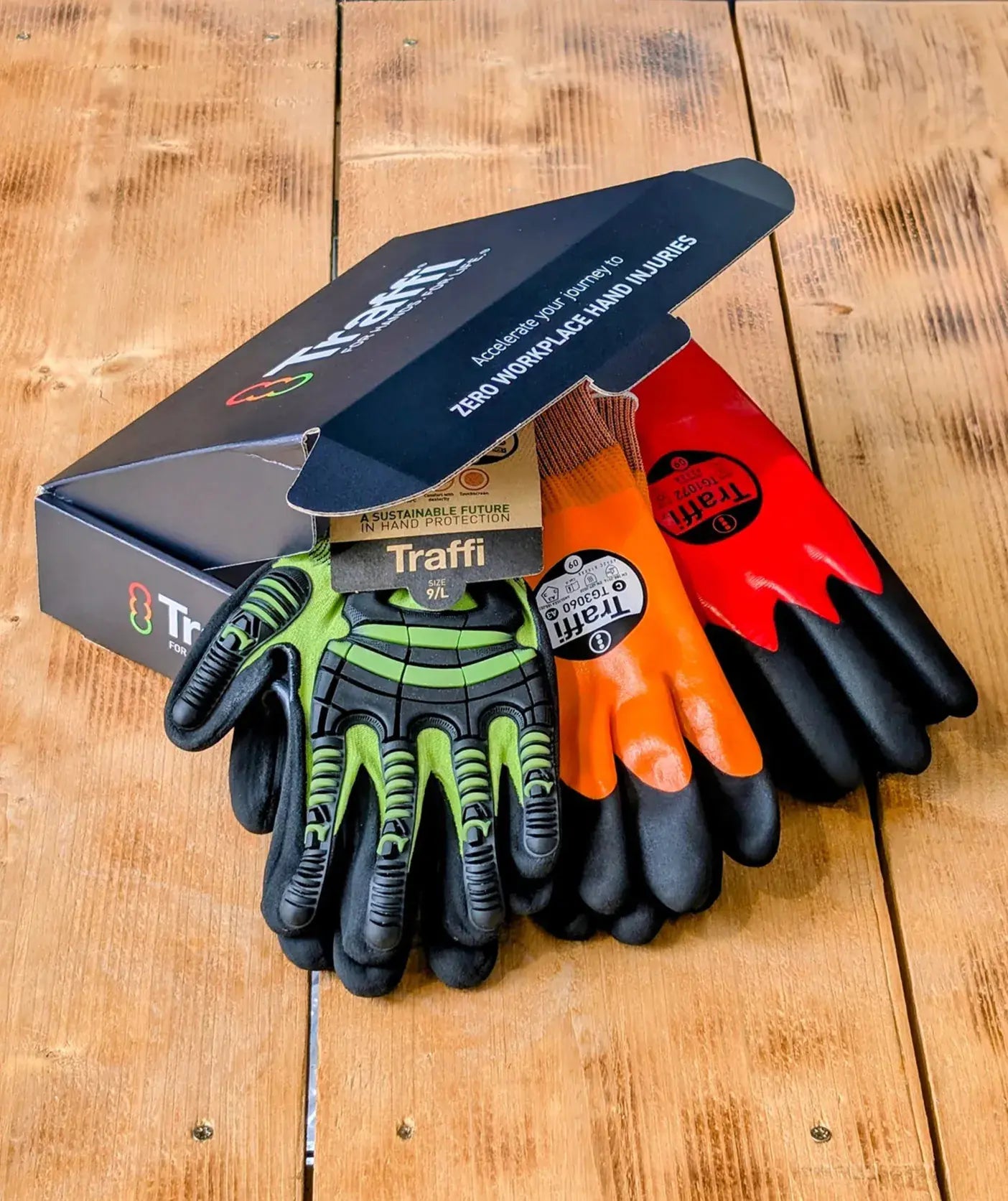
SAFETY GLOVES FOR ENERGY & UTILITIES
Working in energy and utilities means operating in environments where risks are constant, conditions are unpredictable, and protection needs to perform over time.
As an industrial glove manufacturer, Traffi develops gloves designed to support field engineering, infrastructure maintenance, and utilities work, where durability, grip, and protection are essential.
From handling tools and materials to working across networks and installations, selecting the right gloves plays a key role in supporting safety and consistency across teams.
BUILT FOR REAL-WORLD UTILITIES WORK
Energy and utilities work rarely happens in controlled environments. It takes place across live networks, infrastructure projects, and field-based operations where conditions change constantly. You’ll typically see this across:
Network maintenance

Working on live systems, handling tools, cables, and components where grip and control are critical
Infrastructure installation

Installing and upgrading systems in demanding environments where durability and protection need to hold up over time
Field engineering

Operating across varied locations, often outdoors, where gloves must perform in different weather and working conditions
Repair and reactive work

Responding to faults and failures where speed matters, but protection cannot be compromised
In each of these scenarios, gloves need to do more than meet a specification.
They need to support how the work is actually carried out.
WHERE THE RISKS COME FROM
In utilities work, hand risk isn’t one thing. It changes depending on the task, the environment, and the equipment being used. Cut risks come from handling cables, components, and materials with sharp edges. Impact risks appear when working with tools, plant, or heavy infrastructure. Grip becomes critical when conditions are wet, oily, or unpredictable.
For some roles, including electrical work, protection needs to go further. Tasks involving cables, connections, and installations often require electricians gloves that balance dexterity with reliable protection.
The challenge is not only identifying these risks, but making sure the glove used actually reflects how the work is carried out.


What this looks like in practice:
- Gloves are matched to specific tasks
so the level of protection reflects how the work is actually carried out.
- Protection is balanced with usability
so gloves allow the user to maintain control and complete tasks effectively.
- Gloves are trialled in real environments
to confirm performance, comfort, and suitability before wider rollout.
- Glove selection is standardised across teams
to improve consistency and ensure protection is applied correctly.
This approach makes it easier to move from product selection to real-world adoption, especially across large or distributed operations.
FIND THE RIGHT GLOVES FOR UTILITIES WORK
Different tasks require different types of protection. The quickest way to move forward is to match the glove to the risk.
Cut-resistant gloves

For handling cables, components, and materials where sharp edges are a risk
Impact gloves

For working with tools, plants, and infrastructure where hands are exposed to force or crushing
Chemical-resistant gloves

For tasks involving oils, fuels, or hazardous substances commonly found in utilities environments
Heat-resistant gloves

For tasks involving hot surfaces, equipment, or thermal exposure in specific utilities applications
Each category is designed to support specific tasks, making it easier to identify the right glove and move from selection to evaluation.


HELPING DISTRIBUTORS SUPPORT UTILITIES CUSTOMERS
For distributors working with utilities contractors, infrastructure providers, and field engineering teams, glove selection is often tied directly to real working conditions.
This page is designed to support those conversations.
It helps you identify gloves suited to utilities tasks, explain protection in a practical way, and guide customers towards solutions that reflect how their teams actually work. Also, it makes it easier to support trials, compare options, and move from initial enquiry through to implementation with confidence.
When combined with samples, datasheets, and product guidance, this creates a more structured way to support customers operating in demanding environments.


SAFER WORK IN ENERGY AND UTILITIES
Working across energy and utilities means managing risk in environments where conditions change and tasks vary.
Selecting the right gloves plays a key role in supporting that. By matching protection to the task, testing gloves in real conditions, and ensuring consistency across teams, it becomes easier to improve safety and maintain performance in the field.
Whether you are reviewing hand protection across operations or looking for the right gloves for a specific task, you can explore the range, compare options, and take the next step.
FREQUENTLY ASKED QUESTIONS
Prefer to talk?
If you would rather discuss things directly, you can speak with our team.
In energy and utilities environments, gloves are selected based on the specific risks involved in each task. This often includes cut-resistant gloves for handling cables and materials, impact gloves for working with tools and infrastructure, and chemical-resistant gloves where exposure to oils or substances is possible. At Traffi, we design gloves to support these environments, helping you match protection to how work is actually carried out rather than relying on a single glove type.
Choosing the right gloves starts with understanding the task and the risks involved. In utilities work, this can include sharp materials, heavy equipment, and changing environmental conditions. We recommend taking a structured approach by identifying hazards, reviewing protection requirements, and testing gloves in real conditions. You can explore this further in our glove selection process, which outlines how to move from risk assessment to practical glove selection.
Yes, certain tasks carried out by electricians require gloves that balance dexterity with protection. These may include handling cables, connections, and components where precision is important but risks still exist. While not all tasks require specialist electrical insulation gloves, selecting appropriate electricians gloves ensures that protection does not interfere with the ability to work safely and effectively in real environments.
Hand risks in utilities work vary depending on the task, but commonly include cuts from sharp materials, impact injuries from tools or equipment, and reduced grip in wet or outdoor conditions. These risks are often combined, which makes glove selection more complex. By identifying where these risks occur and selecting gloves accordingly, you can improve both safety and usability across teams. The risks go up to death when dealing with high voltage risks, which makes the need for the right hand protection even more critical.
Using the same glove across all tasks can lead to gaps in protection or reduced performance. In utilities environments, different activities introduce different risks, so gloves should be selected to reflect those conditions. At Traffi, we focus on helping you match gloves to tasks so that protection aligns with real work, which improves consistency and supports safer working practices.
Glove trials allow you to test products in real working conditions before making a wider decision. This is particularly important in utilities environments, where gloves need to perform across different tasks and conditions. By trialling gloves, you can assess comfort, durability, and suitability, helping ensure that the selected glove will be used consistently and deliver the expected level of protection.
Gloves used in utilities work are typically tested against recognised standards such as EN388, which measures resistance to mechanical risks like cut and abrasion. Understanding these ratings helps you compare gloves and ensure they meet the required level of protection. We explain this in more detail in our EN388 resource, helping you interpret ratings in a practical, task-focused way.
Distributors play an important role in helping utilities organisations select and implement the right gloves. They can provide product guidance, support trials, and help you compare options based on your working environment. By working with a distributor, you gain access to local expertise and practical support, making it easier to move from product selection to consistent use across teams.
Yes, glove selection is a key part of a wider hand safety approach. When gloves are selected based on task and risk, and used consistently across teams, they can help reduce injuries and improve compliance. At Traffi, we support this through structured selection, trials, and ongoing guidance, helping you build a more effective and practical safety strategy.
If you want to explore hand protection in more detail, Traffi provides a range of resources covering glove types, selection, and real-world applications. Our ultimate guide to safety gloves offers a useful starting point, helping you understand different glove categories and how they are used across industries, including utilities and infrastructure environments.