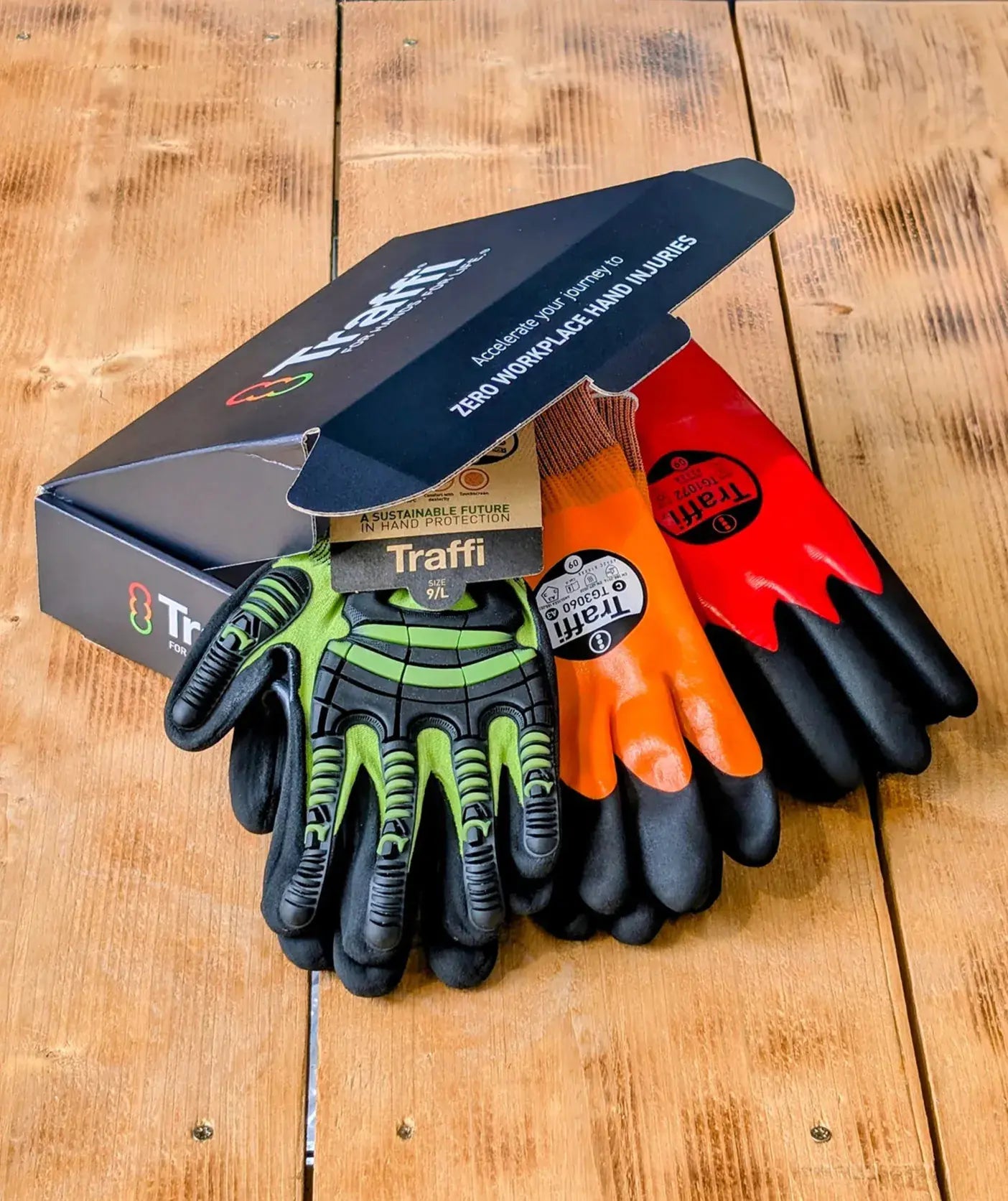
SAFETY GLOVES FOR MANUFACTURING & ENGINEERING
Manufacturing and engineering environments demand gloves that can perform under pressure. From fabrication and machining to assembly and maintenance, protection needs to match the risks involved in each task.
As an industrial glove manufacturer, Traffi develops engineering gloves designed to support these environments, combining durability, dexterity, and high levels of protection.
For applications involving heat and metalwork, selecting the right welding gloves is essential to protect against thermal exposure while maintaining control and usability.

You’ll typically see this across:
- Fabrication,
where handling metal components and sharp edges requires reliable cut protection and durability
- Machining,
where interaction with tools and equipment introduces both mechanical and impact risks
- Assembly,
where dexterity and control are essential without compromising protection
- Maintenance and repair,
where tasks vary and gloves need to perform across different conditions
In these environments, gloves need to support both protection and performance, allowing users to work safely without losing control or efficiency.
WHERE RISKS COME FROM IN MANUFACTURING WORK
In manufacturing and engineering environments, risks are often immediate and task-specific.
Handling metal components introduces consistent exposure to cuts and abrasions.
Working with machinery brings the risk of impact, crushing, and contact with moving parts. Fabrication and welding processes introduce heat and thermal exposure, where protection needs to perform under sustained conditions. For tasks involving high temperatures and metalwork, selecting appropriate welding gloves becomes critical, not just for protection, but for maintaining control during precise work.
Across these environments, glove selection needs to reflect both the level of risk and the way the task is carried out.

SUPPORTING GLOVE SELECTION IN MANUFACTURING ENVIRONMENTS
In manufacturing, you’re often dealing with multiple risks across different tasks, sometimes within the same process. Selecting the right glove means making sure protection matches what your teams are actually doing, not just what a specification suggests. At Traffi, you’re supported through a structured approach that helps you move from risk to the right level of protection. What this looks like in practice:

You match gloves to specific tasks so protection reflects the real risks involved in fabrication, machining, and assembly work.

You balance protection with usability so gloves allow your teams to maintain control, precision, and productivity.

You use the TraffiSystem® to simplify selection by clearly identifying protection levels across different glove types.

You validate performance through trials so you can see how gloves perform in your own environment before making wider decisions.
This makes it easier to standardise glove use, improve consistency across teams, and support safer, more efficient operations.
FIND THE RIGHT GLOVES FOR MANUFACTURING TASKS
In manufacturing environments, selecting the right glove starts with understanding the task and the level of risk involved.
Cut-resistant gloves

For handling metal components, sharp materials, and fabrication work where cut protection is critical
Impact gloves

For working with tools, machinery, and heavy components where hands are exposed to force or crushing
Heat-resistant gloves

For welding, fabrication, and high-temperature tasks where thermal protection and control are essential
Each category is designed to support specific applications, making it easier for you to match protection to the task and move from selection to real-world use.
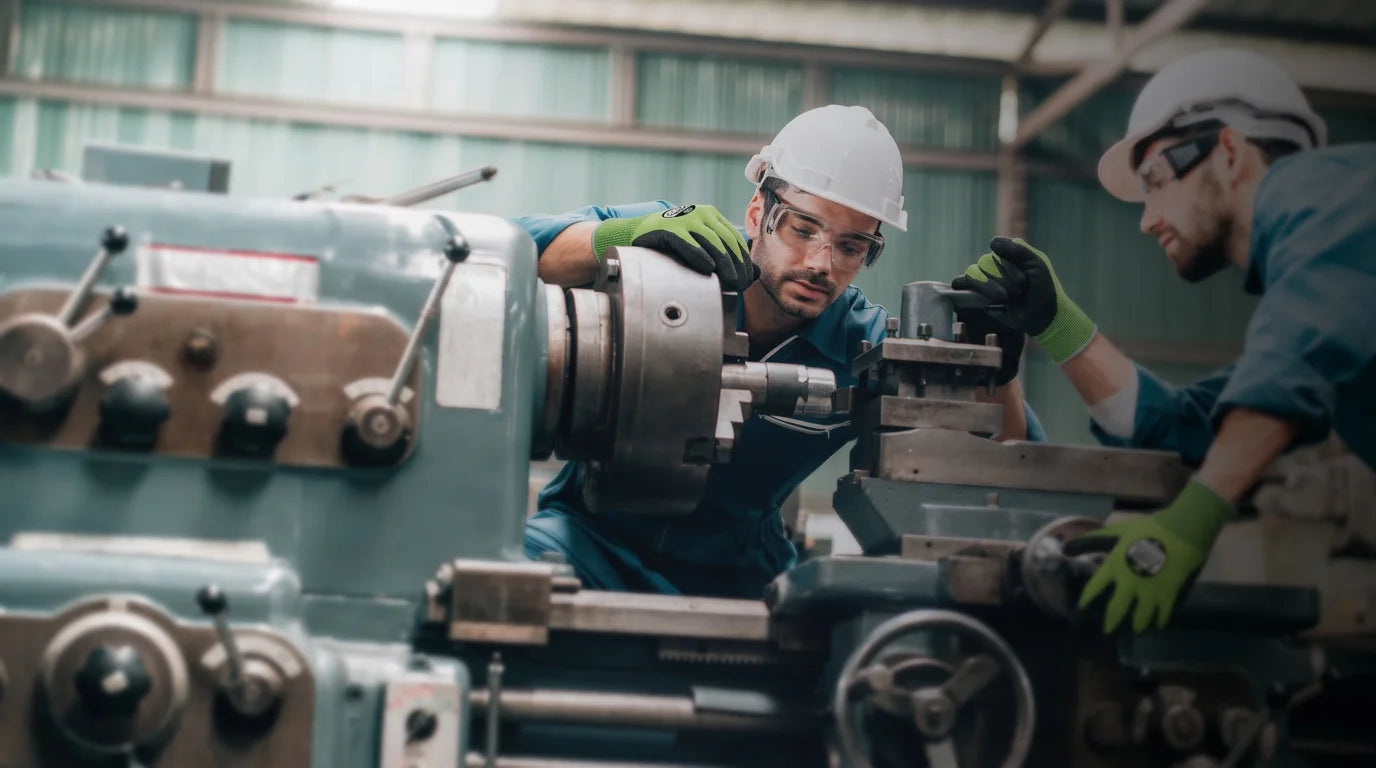
PROVEN IN MANUFACTURING ENVIRONMENTS
In manufacturing and engineering environments, glove performance is measured by how it holds up across real tasks, not just specifications.
When gloves are selected and used correctly, the impact is typically seen in:
- More consistent protection across tasks
Gloves are matched to fabrication, machining, and assembly work, reducing gaps in protection - Improved control during handling and precision work
Allowing users to maintain dexterity without compromising safety - Better durability under demanding conditions
Supporting longer use across repetitive or high-friction tasks - Stronger consistency across teams and sites
Helping standardise glove use and reduce variation in protection
These are practical outcomes that support both safety and productivity in environments where performance matters day to day.
SUPPORTING DISTRIBUTORS IN MANUFACTURING AND ENGINEERING
In manufacturing, you’re often supporting customers who are dealing with specific risks tied to defined processes. Glove selection is tied directly to how the work is carried out.
When you’re working with fabrication or machining environments
You need to show how gloves handle sharp materials, repeated contact, and demanding conditions without failing over time
When customers are focused on compliance and safety performance
You’re expected to demonstrate how gloves meet required standards while still allowing teams to work effectively
When introducing new gloves into established operations
You need to prove how they perform in practice, not just on paper, especially where teams are used to specific products
This is where trials, clear product positioning, and task-based selection become critical in supporting adoption.

Proven across our customers
View All Case StudiesFinning is the world's largest Caterpillar equipment dealer, supporting customers across construction, mining, energy and industrial sectors from branches across the UK and Ireland. With a large field service and engineering workforce in demanding environments, consistent hand protection is central to operational safety.


FIND THE RIGHT GLOVES FOR YOUR MANUFACTURING ENVIRONMENT
In manufacturing and engineering, the right gloves are the ones that perform consistently across the tasks your teams carry out every day.
Matching protection to the task, testing gloves in real conditions, and selecting products that support both safety and usability all play a role in improving performance across the operation. If you’re reviewing your current glove use or looking to introduce a more suitable solution, you can explore the range, compare options, and take the next step.
FREQUENTLY ASKED QUESTIONS
Prefer to talk?
If you would rather discuss things directly, you can speak with our team.
In manufacturing and engineering environments, gloves are selected based on the specific task and associated risks. This often includes cut-resistant gloves for handling metal components, impact-resistant gloves for working with tools and machinery, and heat-resistant gloves for high-temperature tasks such as welding. We design our gloves to support these environments, helping you match protection to how work is actually carried out rather than relying on a single glove type.
Welding gloves are designed to protect against heat, sparks, and thermal exposure during welding and fabrication tasks. They also need to allow enough control for handling tools and materials safely. In practice, this means balancing thermal resistance with usability. The right welding gloves will protect your hands without restricting movement, which is critical when working with precision in high-temperature environments.
Choosing the right engineering gloves starts with understanding the task, whether that’s machining, fabrication, or assembly. From there, you can identify risks such as cuts, impact, or heat exposure. We recommend taking a structured approach by matching gloves to those risks and testing them in real conditions. Our glove selection process explains how to move from hazard identification to practical product selection.
Yes, cut-resistant gloves are commonly used in manufacturing environments where sharp materials, metal components, and tools are handled regularly. The level of cut protection required will depend on the task. Selecting the right level helps reduce injury risk while still allowing the user to maintain dexterity and control. The key is to match the glove to the specific application rather than choosing the highest level by default.
Heat-resistant gloves should be used when tasks involve exposure to high temperatures, such as welding, fabrication, or handling hot components. These gloves are designed to provide thermal protection while still allowing users to maintain control. It’s important to select gloves that are appropriate for the level and duration of heat exposure, as well as the type of work being carried out.
When gloves are selected based on task and risk, they are more likely to be used correctly and consistently. This helps reduce hand injuries and improves overall safety performance. In manufacturing environments, where tasks vary and risks can change quickly, taking a structured approach to glove selection ensures that protection is aligned with real working conditions rather than assumptions.
Gloves used in manufacturing and engineering are typically tested against standards such as EN388, which measures resistance to mechanical risks like cut, abrasion, and puncture. Understanding these ratings helps you compare products and ensure they meet the required level of protection.
Dexterity is critical in engineering environments where tasks require precision, control, and interaction with tools or components. Gloves that restrict movement can slow work down or increase the risk of errors. The right gloves provide protection while still allowing users to handle materials accurately, which is essential in tasks such as assembly, machining, and fabrication.
Yes, testing gloves in real working conditions is one of the most effective ways to confirm suitability. Trials allow you to assess how gloves perform during actual tasks, including comfort, durability, and usability. This helps ensure that the selected glove will be used consistently across teams and will deliver the expected level of protection in practice.
If you’re supplying manufacturing customers, your role often involves more than providing products. You need to support task-based selection, help customers compare options, and provide access to trials and technical information. By focusing on how gloves perform in real environments, you can help customers move towards solutions that improve both safety and productivity over time.