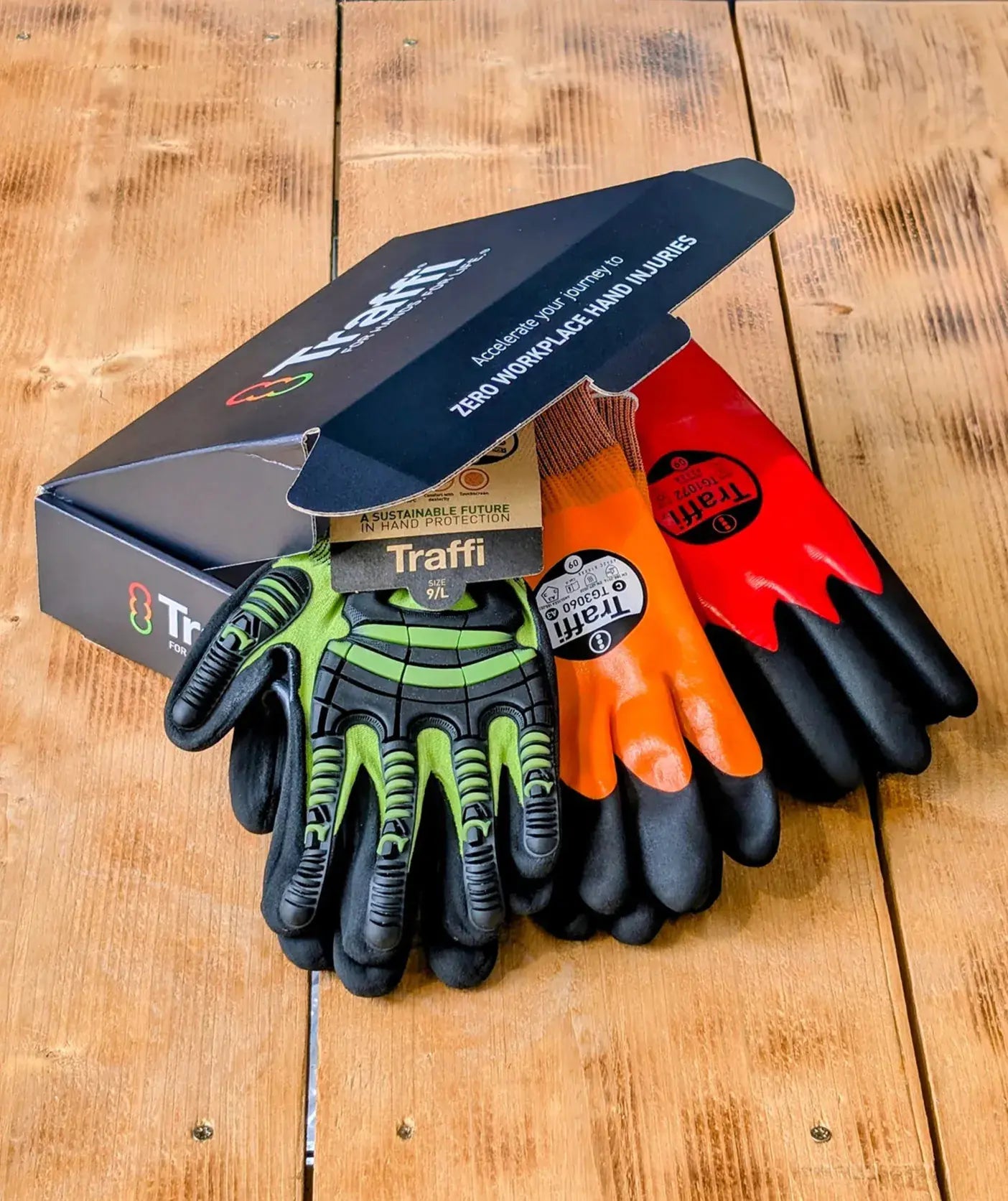
CUT-RESISTANT GLOVES FOR RELIABLE HAND PROTECTION
Cut hazards are common across many working environments, from construction and manufacturing to logistics and engineering. Traffi’s range of cut-resistant gloves is designed to help you protect your workforce from sharp materials, reduce the risk of injury, and maintain performance in demanding conditions.
Whether you are selecting gloves for a specific task or implementing a wider safety strategy, you can use this page to explore cut resistant gloves by protection level, application, and performance.
FIND THE RIGHT CUT RESISTANT GLOVES FOR YOUR TASK
Choosing the right level of cut protection depends on the risk. The TraffiSystem® uses a simple, colour-coded approach to help you quickly match gloves to your application:
Red - Low Cut Risk

Light handling, low hazard environments
Amber - Medium Cut Risk

General handling with some sharp materials
Green - High Cut Risk

Frequent contact with sharp edges or materials
This structured approach makes it easy to select the right level of protection at a glance, helping you avoid both under-protection and over-specification while ensuring gloves are safe, practical, and suited to the task.
UNDERSTANDING CUT PROTECTION LEVELS
Cut-resistant gloves are tested using EN388 standards, which measure how well a glove resists cutting forces.
Cut resistance is typically shown using:
• A–F rating (ISO cut test) – modern, more accurate
• 0–5 rating (Coupe test) – older method
Higher ratings indicate greater resistance, but the right choice depends on your task, not just the score. If you are working with sharp or high-risk materials, higher cut levels will usually be required, but comfort, dexterity, and usability still matter.


MATCH CUT LEVEL TO REAL-WORLD HAZARDS
To select the correct glove, you need to connect cut levels to actual risks.
Consider:
- Type of material (metal, glass, sharp components)
- Frequency of contact with sharp edges
- Force applied during the task
- Duration of exposure
For example:
- Brief contact = lower cut level
- Repetitive handling of sharp materials = higher cut level
This ensures your cut resistant gloves are matched to the real working environment.
DESIGNED FOR PERFORMANCE ACROSS INDUSTRIES
Traffi’s cut resistant gloves are used across a wide range of industries where cut hazards are present. Each environment presents different risks, which is why the range includes gloves designed for varying levels of protection, grip, durability, and flexibility.


The range is structured to help you:
Identify the correct level of protection quickly
Compare gloves based on performance
Select products suitable for your application
Maintain consistency across teams or sites
Supporting your hand safety strategy
If you are responsible for safety across your organisation, cut resistant gloves play a key role in reducing hand injuries.
By selecting the correct protection level and applying it consistently, you can:
- reduce incidents involving sharp materials
- improve compliance across teams
- support safety training and awareness
- standardise glove usage across sites
This helps you move from reactive PPE selection to a more structured safety approach.

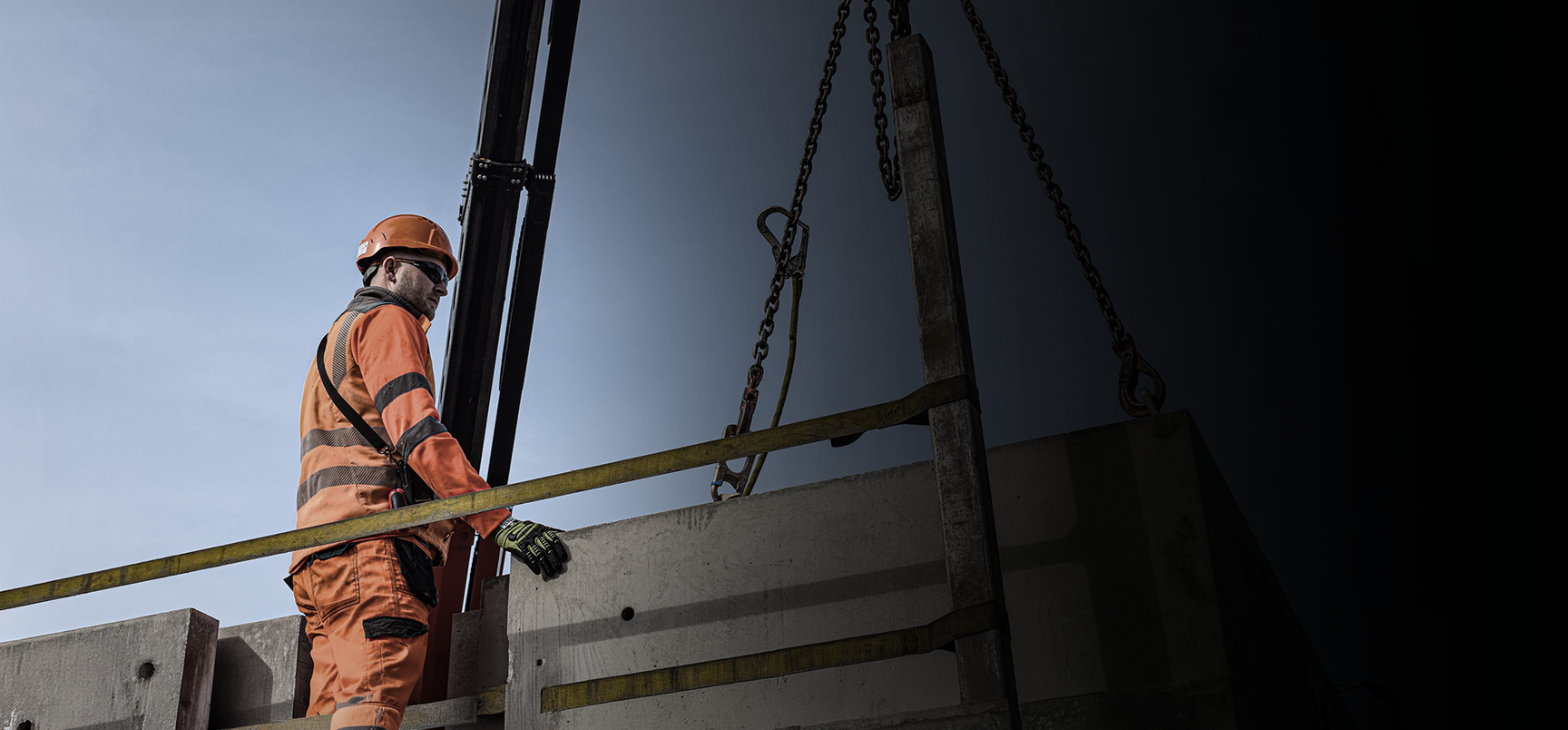
HELPING YOU SUPPORT CUSTOMER NEEDS
If you are a distributor, this page helps you quickly identify the right cut resistant gloves for your customers.
You can:
- match products to customer applications
- explain protection levels clearly
- support trials and product evaluation
- guide customers towards the correct solution
This makes it easier to move from product supply to more consultative safety conversations.
EXPLORE CUT-RESISTANT GLOVES
Explore our range of cut-resistant gloves below.

/per pair, pack of 10
[Ex.Vat]Ultra-Lightweight Nitrile Safety Glove
Cut Level F


FREQUENTLY ASKED QUESTIONS
Prefer to talk?
If you would rather discuss things directly, you can speak with our team.
Cut resistant gloves are designed to protect your hands from sharp materials and reduce the risk of cuts and lacerations in the workplace. They are commonly used in environments such as construction, manufacturing, and logistics, where handling sharp objects is part of the job. These gloves are tested against recognised standards to measure how well they resist cutting forces, helping you select the right level of protection for your specific task.
The level of cut resistance you need depends on the task and the risk involved. Light handling tasks may require lower cut levels, while frequent contact with sharp materials such as metal or glass will require higher protection. The key is to match the glove to the hazard, not simply choose the highest rating.
Cut levels A–F refer to the ISO 13997 cut resistance test used in EN388. This test measures the amount of force required to cut through a glove material, with A representing lower resistance and F representing the highest level of protection. These ratings help you compare gloves more accurately, particularly for high-risk tasks involving sharp materials. Understanding these levels is key to selecting the right glove for your application.
No. Cut resistant gloves are designed to reduce the risk of injury, but they are not completely cut proof. The level of protection depends on the material, the force applied, and the type of hazard. This is why selecting the correct cut level and ensuring the glove is suitable for the task is essential. Even high-performance gloves should be used as part of a wider safety approach, not relied on in isolation.
Cut resistant gloves help reduce injuries by providing a barrier between your hands and sharp materials. When the correct glove is selected and used consistently, it can significantly lower the likelihood of cuts and lacerations. However, the effectiveness depends on proper selection, correct usage, and alignment with the task. This is why understanding risk and protection levels is just as important as the glove itself.
Cut resistant gloves are typically made using high-performance fibres designed to resist cutting forces while maintaining flexibility and comfort. These materials are often engineered to balance protection with usability, ensuring the glove can be worn for extended periods without affecting performance. The combination of materials, coating, and construction all contribute to the overall protection level and suitability for different applications.
Choosing between gloves involves more than just comparing cut levels. You should also consider grip, durability, flexibility, working conditions, and how the glove will be used in practice. A glove that performs well in testing must still be suitable for the task and environment. The ultimate guide to safety gloves provides a broader overview of how to compare gloves and select the right option based on both performance and application.
Yes. Using gloves that meet recognised standards helps ensure your PPE is aligned with safety requirements and provides a consistent level of protection across your workforce. When combined with clear guidance and correct usage, cut resistant gloves can support compliance, improve consistency, and reduce the risk of incorrect glove selection.
If you want to understand cut protection in more detail, including how it is tested and applied, you can explore Traffi’s technical resources. The ultimate guide to safety gloves and the glove selection process both provide practical guidance on standards, materials, and selecting the correct glove for your application.