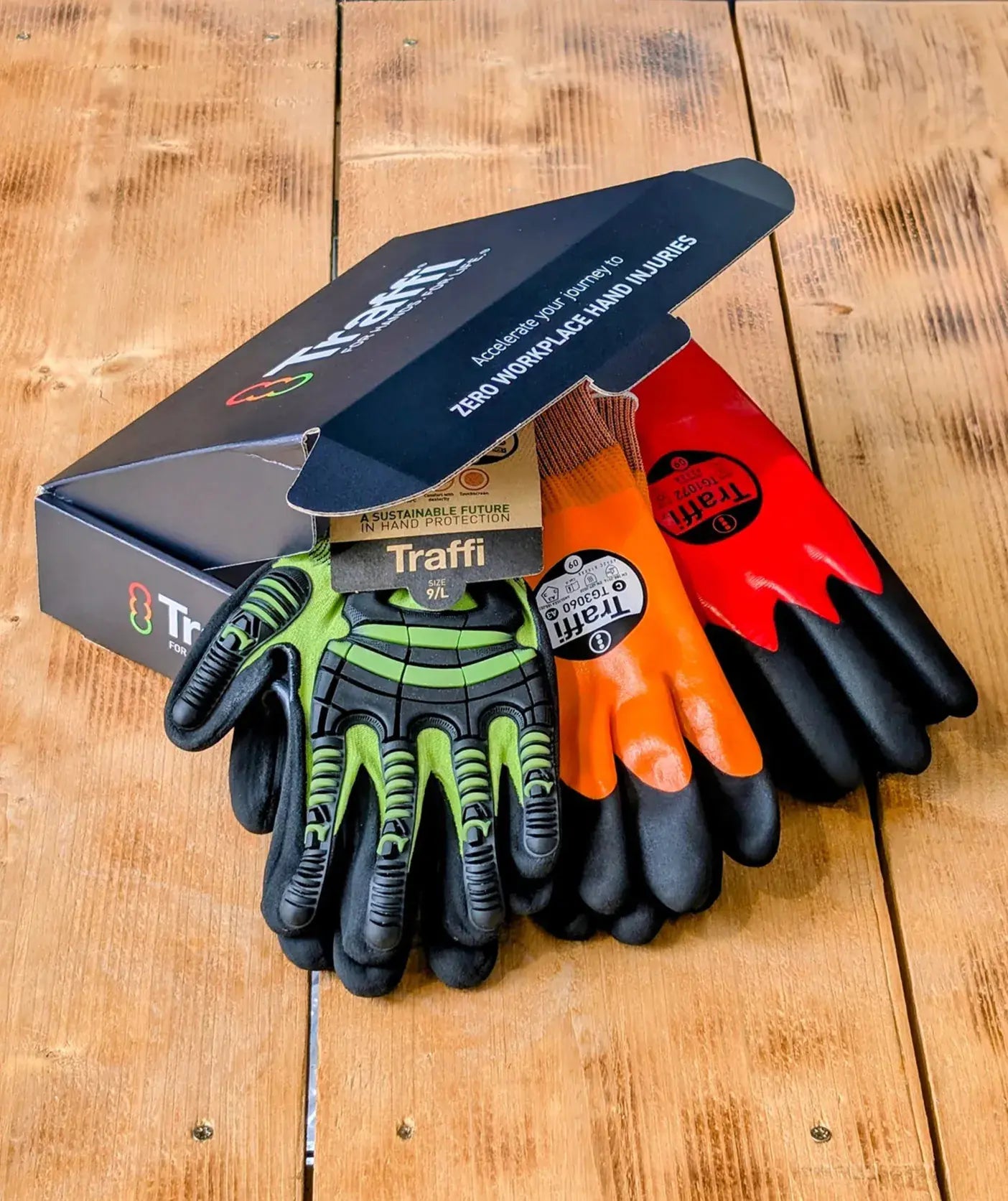
CONSTRUCTION SAFETY GLOVES FOR DEMANDING SITE ENVIRONMENTS
Construction environments present a wide range of hand injury risks, from sharp materials and heavy handling to repetitive tasks and exposure to harsh conditions.
Traffi’s construction safety gloves are designed to help you reduce injuries, improve compliance, and maintain performance across building sites and infrastructure projects.
Whether you are managing safety across multiple sites or selecting gloves for specific tasks, you can use this page to identify the right building site gloves for your environment.

Sharp edges and abrasive surfaces
Heavy or repetitive handling
Impact and crush risks
Changing environmental conditions
MATCHING GLOVES TO CONSTRUCTION TASKS
Different tasks require different types of protection.
A practical approach is to match building site gloves to the work being carried out:
Material handling

Durability, grip, abrasion resistance
Groundwork and heavy tasks

Durability and impact resistance
Cutting and sharp materials

Higher cut protection
Installation and finishing work

Flexibility and dexterity
This makes it easier to select gloves that are suitable for real working conditions, helping you avoid both under-protection and unnecessary over-specification.
DESIGNED FOR
REAL SITE CONDITIONS
Construction environments are unpredictable.
Gloves need to perform across varying conditions, including:
- wet and slippery surfaces
- rough materials
- extended wear periods
- changing tasks throughout the day
Traffi’s construction safety gloves are designed to balance protection with usability, ensuring workers can maintain grip, control, and comfort while staying protected.
This is key to improving adoption, as gloves that are not practical are less likely to be worn consistently.

Supporting your hand safety strategy
If you are responsible for safety across multiple sites or projects, consistency is one of the biggest challenges.
Different tasks, teams, and environments can quickly lead to variation in glove usage, which increases the risk of incorrect protection being used.
A more structured approach to hand protection helps you bring that back under control.
When glove selection is aligned to the task, you start to see the difference in practice:
- Fewer incidents linked to incorrect or unsuitable gloves
- More consistent usage across teams and sites
- Clearer alignment with internal safety procedures
- Greater confidence that the right protection is being used
This is where the focus shifts from simply supplying gloves to improving how they are selected and used day to day.
Traffi supports this through practical guidance, product trials, and on-site evaluation, helping you identify what works in real construction environments and apply it consistently.

A PRACTICAL APPROACH TO GLOVE SELECTION ON SITE
Selecting construction safety gloves should not be based on guesswork or habit.
A structured approach helps you make better decisions:
Identify the task

What work is being carried out?
Assess the risk

Cut, abrasion, impact, or general handling?
Select the glove

Does the protection level match the task risk?
Test in practice

Will it work in real site conditions?
This approach improves both safety outcomes and user acceptance across your teams.
HELPING YOU SUPPORT CONSTRUCTION CUSTOMERS
If you are working with contractors or construction clients, your role is to recommend gloves that match how work is actually carried out on site.
This page helps you:
- Identify suitable building site gloves for different tasks
- Support customer trials and product evaluation
- Provide clear, practical recommendations
- Improve confidence in product selection
This allows you to move beyond product supply and support more effective safety conversations.
EXPLORE GLOVES SUITED TO CONSTRUCTION TASKS
You can explore gloves suited to construction and infrastructure environments below.


PROVEN ON MAJOR CONSTRUCTION & INFRASTRUCTURE PROJECTS
View All Case Studies
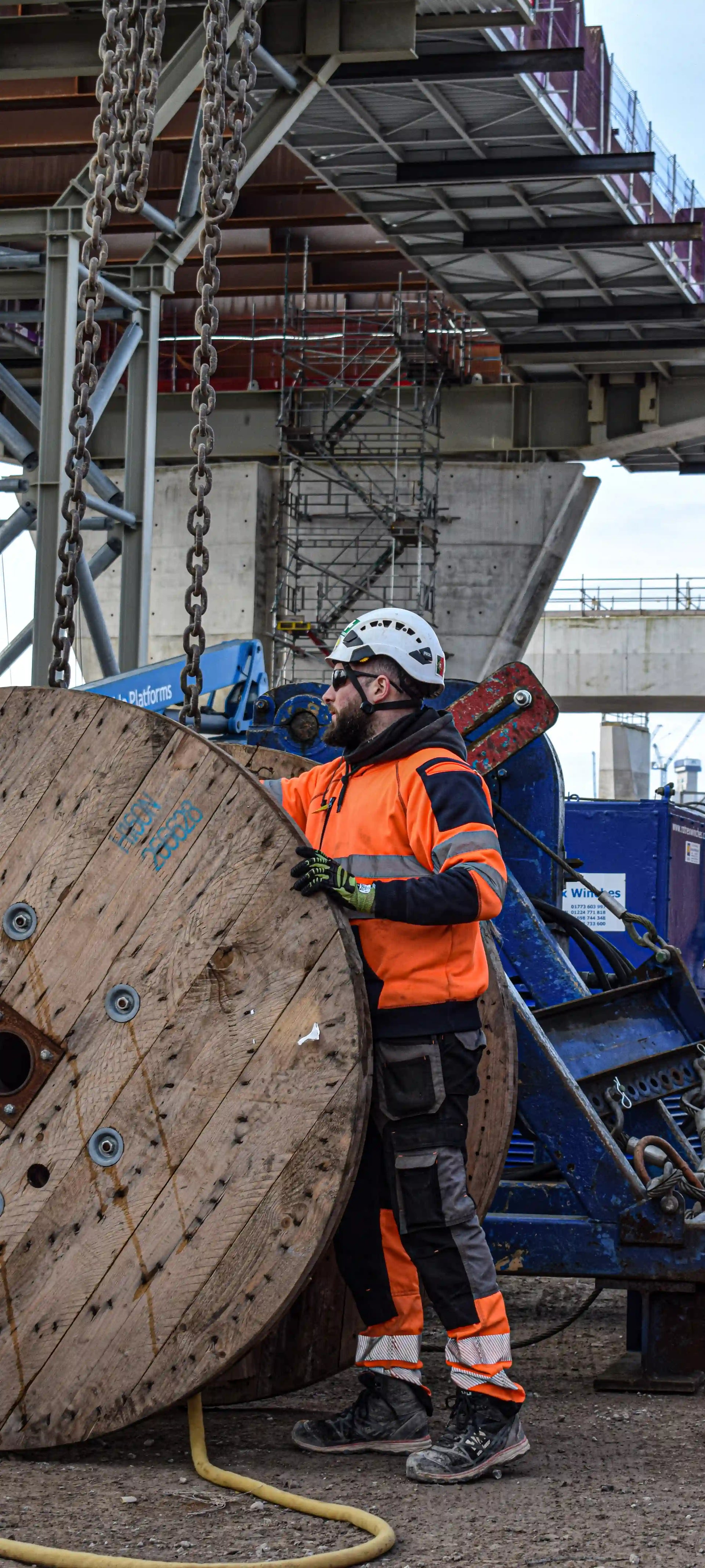
Balfour Beatty VINCI (BBV) is a joint venture delivering 90km of the HS2 route in the Midlands across two civil engineering packages valued at approximately £5 billion. With 9,000 workers from over 70 nationalities on site, consistent hand protection requires clear visual systems and on-the-ground support.


FIND THE RIGHT GLOVES FOR YOUR CONSTRUCTION ENVIRONMENT
Selecting the right construction safety gloves comes down to understanding the task, the risk, and how your teams work on site. With the right approach, you can improve protection, increase consistency, and support safer working practices across your projects.
Whether you are reviewing your current PPE or selecting gloves for a specific task, you can take the next step here.
FREQUENTLY ASKED QUESTIONS
Prefer to talk?
If you would rather discuss things directly, you can speak with our team.
Construction safety gloves are designed to protect your hands from the range of risks found on building sites, including cuts, abrasion, impact, and general handling hazards. They are used across tasks such as material handling, installation, groundwork, and working with tools or sharp materials. The right glove helps reduce injury risk while still allowing you to work effectively.
Building site gloves are used to protect hands during common construction tasks such as lifting materials, handling sharp edges, cutting, and working with tools. Different tasks require different types of protection, so gloves should be selected based on the specific activity, not just the environment. This helps ensure both safety and usability on site.
The type of glove you should use depends on the task and the risk involved. For example, handling sharp materials may require cut-resistant gloves, while heavy-duty tasks may require more durable or impact-resistant options. The key is to match the glove to the task, ensuring the protection level supports how the work is actually carried out.
Choosing the right gloves starts with understanding the task and the associated risks. You should consider what materials are being handled, the level of hazard, and the working conditions. From there, you can select a glove that provides the appropriate level of protection while still allowing for grip, flexibility, and comfort. A structured approach to this is outlined in the glove selection process, which helps you match gloves to real tasks.
Common hand injuries on construction sites include cuts, abrasions, punctures, and impact-related injuries. These often occur during tasks such as handling materials, using tools, or working with sharp or rough surfaces. Selecting the correct construction safety gloves for each task helps reduce the likelihood of these injuries and supports safer working practices.
Yes. When gloves are correctly matched to the task and used consistently, they can significantly reduce the risk of hand injuries. The key is ensuring that workers are provided with gloves that are suitable, comfortable, and practical to use. This improves adoption and helps maintain consistent protection across teams and sites.
Yes. Construction safety gloves should meet recognised standards that relate to the risks involved, such as mechanical protection. These standards help ensure that gloves have been tested for performance and provide a reliable level of protection. Understanding how these standards apply can support better selection and compliance across your organisation.
Glove adoption is often linked to comfort, fit, and usability. If gloves restrict movement or make tasks more difficult, workers are less likely to wear them consistently. Selecting gloves that balance protection with flexibility and grip helps improve acceptance. Involving workers in trials and selection can also lead to better long-term usage.
Yes. This page helps you identify gloves suited to specific construction tasks, making it easier to recommend the right products to your customers. By understanding task requirements and protection levels, you can provide more informed guidance, support trials, and improve confidence in product selection.
You can explore gloves by application and protection type, allowing you to match products to specific construction tasks such as handling materials, cutting, or installation work. For a broader understanding of glove types and performance, you can also refer to the ultimate guide to safety gloves, which provides useful context when comparing options.