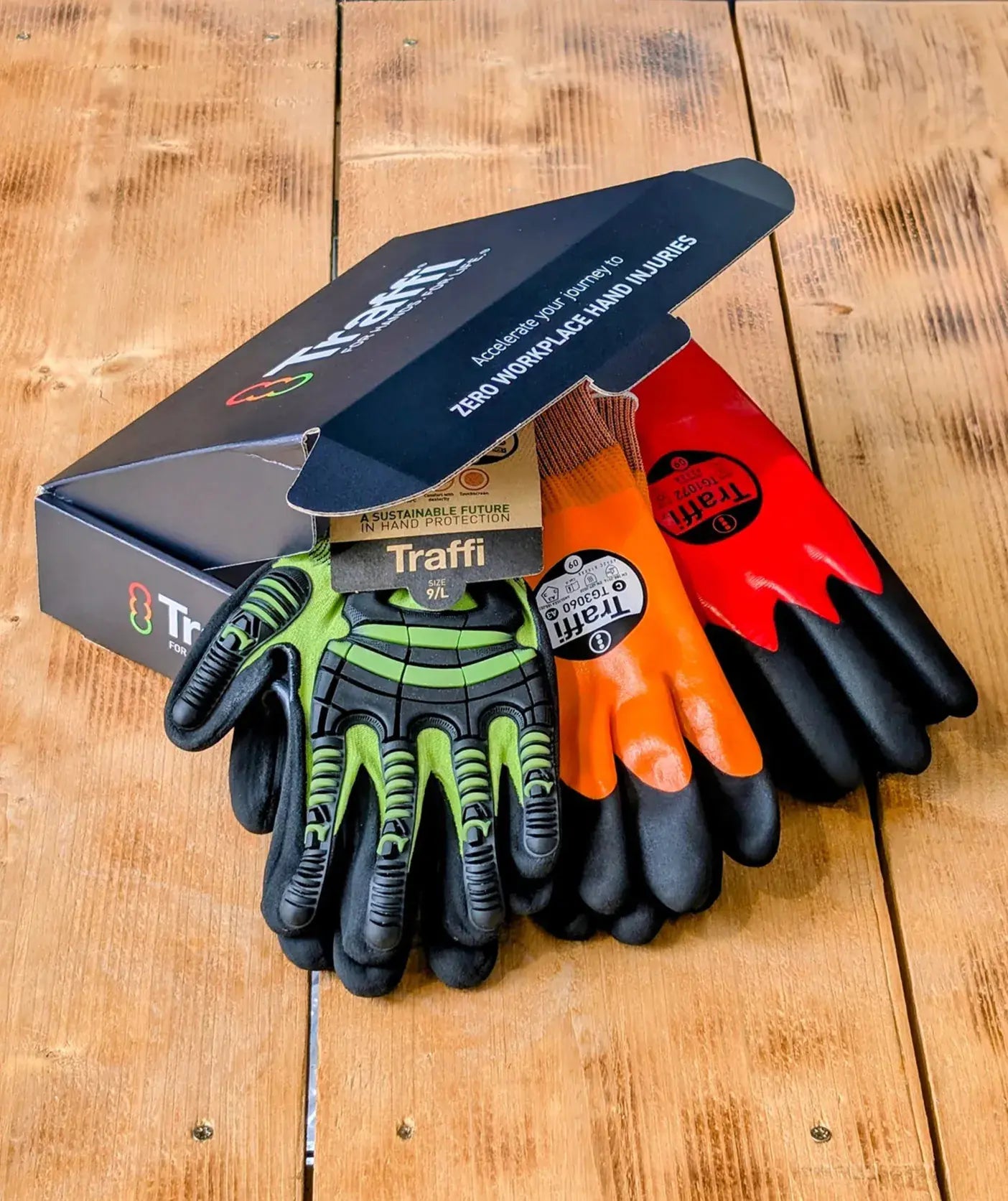
SAFETY GLOVES FOR LOGISTICS AND WAREHOUSING
In logistics and warehousing environments, gloves are used constantly. From picking and packing to pallet handling and distribution, they need to support repetitive tasks without slowing work down.
As an industrial glove manufacturer, Traffi develops logistics gloves designed to balance comfort, durability, and grip, helping teams work safely while maintaining performance throughout the day. For operations where gloves are worn continuously, selecting the right factory safety gloves can improve consistency, reduce replacement frequency, and support better adoption across the workforce.

You’ll see this in environments such as:
- Picking and packing,
where grip and dexterity need to stay consistent across hundreds of movements
- Pallet handling and loading,
where durability becomes critical over repeated use
- Sorting and distribution,
where gloves must allow speed without compromising control
- General warehouse operations,
where comfort directly impacts whether gloves are worn properly
Across these tasks, the challenge isn’t just protection. It’s making sure gloves are comfortable enough to be worn consistently and durable enough to last.
WHERE RISKS SHOW UP IN LOGISTICS WORK
In logistics environments, risk builds over time rather than appearing in one moment.
Handling boxes, packaging, and materials repeatedly increases exposure to cuts and abrasions. Working at speed can lead to knocks, scrapes, and reduced control.
Conditions change across shifts, with dust, moisture, or worn surfaces affecting grip.
For many teams, the bigger issue is consistency. If gloves are uncomfortable or wear out quickly, they are less likely to be used properly, which increases risk across the operation. This is why glove selection in logistics isn’t just about protection levels. It’s about choosing gloves that people will actually wear, shift after shift.

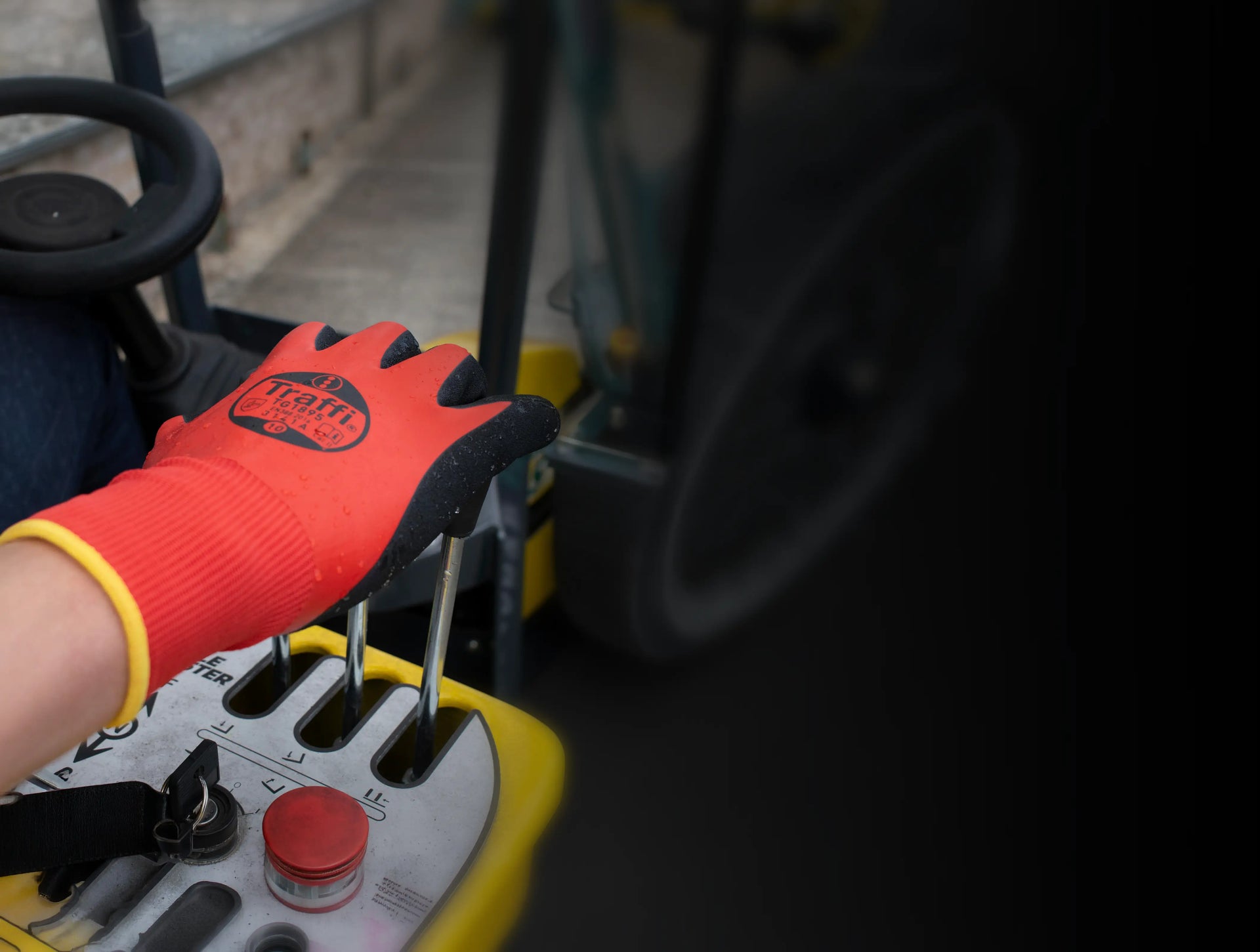
SUPPORTING GLOVE SELECTION IN LOGISTICS ENVIRONMENTS
In logistics, glove selection needs to work at scale.
It’s not just about choosing a glove that meets a standard. It’s about finding a solution that performs consistently across large teams, repeated tasks, and long shifts. At Traffi, the focus is on helping you select gloves that balance protection, comfort, and durability in real working conditions.
What this looks like in practice:
- Gloves are selected based on how they are used day to day so they support repetitive handling without slowing work down.
- Comfort is prioritised to support consistent wear so gloves are more likely to be used properly across the workforce.
- Durability is considered over time, not just initial use helping reduce frequent replacement and glove waste.
- Trials are used to validate performance in real environments so decisions are based on how gloves actually perform in operation.
This approach helps move away from short-term selection and towards solutions that support both safety and efficiency over time.
FIND THE RIGHT GLOVES FOR LOGISTICS TASKS
In logistics environments, the priority is finding gloves that support handling, movement, and consistency across the shift.
Safety gloves for manual handling tasks

For picking, packing, and day-to-day warehouse work, where comfort and dexterity are essential
Cut-resistant gloves

For handling packaging, materials, and components where sharp edges are a risk
Impact gloves

For heavier handling, loading, and tasks involving equipment or pallets
Each option supports different parts of the operation, making it easier to match the glove to the task and maintain consistency across teams.
SUPPORTING REAL-WORLD LOGISTICS OPERATIONS
In logistics environments, success isn’t measured by specification alone. It’s measured by whether gloves are worn consistently, last through the shift, and support the way teams actually work. Traffi gloves are used in warehouse and distribution settings where repetitive handling, speed, and comfort all play a role in day-to-day performance.
Rather than focusing on a single outcome, the impact is typically seen across a combination of factors:
- Improved consistency in glove use across teams
- Reduced need for frequent glove replacement
- Better balance between protection and usability during repetitive tasks
These are practical improvements that support both safety and efficiency, particularly in operations where gloves are used continuously throughout the day.

HELPING DISTRIBUTORS ADD VALUE IN LOGISTICS
In logistics, you’re often working in environments where glove decisions are driven by cost and familiarity. Introducing a different option means showing how it performs in day-to-day work.
Focusing on durability, comfort, and consistency gives you a clearer way to demonstrate value beyond initial price.
Running trials in real warehouse environments allows you to show how gloves hold up across a full shift, how they feel during repetitive tasks, and whether they are more likely to be worn consistently. Over time, this makes it easier to move towards solutions that support both safety and operational efficiency.


FIND THE RIGHT GLOVES FOR YOUR LOGISTICS OPERATION
In logistics environments, the right gloves are the ones that perform consistently across the shift and are worn by the people using them. Testing gloves in your own operation is the most effective way to see how they hold up, how they feel during repetitive tasks, and whether they support the way your teams work.
If you’re reviewing your current glove use or looking to introduce a different solution, you can explore the range, request samples, and take the next step.
FREQUENTLY ASKED QUESTIONS
Prefer to talk?
If you would rather discuss things directly, you can speak with our team.
Logistics gloves are used to support day-to-day handling tasks across warehouses, distribution centres, and fulfilment operations. This includes picking, packing, sorting, and pallet handling. The focus is on providing grip, comfort, and durability so gloves can be worn consistently throughout the shift. In these environments, gloves are not used occasionally; they are part of everyday work, so performance over time is critical.
A good logistics glove needs to balance comfort, grip, and durability. In warehouse environments, gloves are worn for long periods and across repetitive tasks, so they need to remain comfortable and flexible while still providing protection. Durability is also important, as gloves that wear out quickly increase replacement frequency and cost. The right glove supports the task without getting in the way of how work is carried out.
Choosing the right gloves starts with understanding the tasks involved, such as handling packaging, moving goods, or working with pallets. From there, you can identify risks like cuts, abrasion, or reduced grip. We recommend taking a structured approach by matching gloves to those tasks and testing them in real conditions. Our glove selection process explains how to move from risk identification to practical product choice.
Cut-resistant gloves are often used in logistics where there is a risk from packaging materials, sharp edges, or handling certain goods. Not every task requires a high level of cut protection, but in areas where cuts are more likely, selecting the right level of resistance helps reduce injury risk. The key is to match the glove to the task so that protection is provided without compromising comfort or dexterity.
Comfort plays a major role in whether gloves are worn consistently. In logistics environments, where tasks are repetitive and fast-paced, uncomfortable gloves are more likely to be removed or used incorrectly. This reduces protection and increases risk. Gloves that fit well and remain comfortable throughout the shift are more likely to be adopted across teams, which supports both safety and consistency in how they are used.
Durability affects how often gloves need to be replaced and how they perform over time. In logistics operations, frequent replacement can increase cost and create inconsistency if different gloves are used. More durable gloves can help reduce waste and maintain a consistent level of performance across shifts. This makes it easier to manage glove use at scale, particularly in larger warehouse environments.
Yes, testing gloves in your own environment is one of the most effective ways to make a confident decision. Trials allow you to see how gloves perform during real tasks, how they feel over a full shift, and whether they are likely to be worn consistently. This helps reduce the risk of selecting a glove based only on specification, which may not reflect how it performs in practice.
If you’re supplying logistics customers, your role often goes beyond providing products. You need to help them identify gloves that will actually be used consistently across their teams. This includes supporting trials, helping compare options, and demonstrating how different gloves perform over time. By focusing on real-world performance, you can move the conversation beyond price and support better long-term decisions.
Yes, when gloves are matched to the task and worn consistently, they can support both safety and operational efficiency. Reducing injuries, improving grip, and maintaining comfort all contribute to smoother day-to-day work. Over time, this can also reduce disruption and improve consistency across teams, particularly in high-volume logistics environments where small improvements can have a wider impact.