Choosing the right safety glove goes beyond simply picking the toughest or most comfortable option, it’s about making a well-informed decision that protects you and your workforce while supporting performance on the job. With so many variables at play, from the type of task to the conditions workers face every day, selecting the most suitable hand protection requires a structured approach.
To simplify the process, we’ve broken it down into five key steps.
1. CONSIDER THE NATURE OF EACH TASK
Every job has its own set of requirements, and every task must be considered to ensure the correct safety gloves are selected.
Some examples:
- Scaffolding: Handling the poles will require a good level of abrasion and tear protection, as well as the ability to maintain a strong grip in both dry and wet weather conditions.
- Plumbing: Requires high levels of dexterity and protection against the risk of cut on sharp metal edges.
-
Electrical wiring: Requiring medium protection against cut risks and needing great dexterity for intricate tasks.
2. EVALUATE THE WORKING ENVIRONMENTS
Working environments are essential to consider when selecting the right safety gloves. For example, workers carrying out the same role in a warehouse may need lightweight, breathable gloves for dry indoor conditions, while those performing similar tasks outdoors will require gloves with enhanced grip and water resistance to maintain safety and control in poor weather.
Traffi has developed a simple and easy key, which has been applied to each of our gloves, making it easy for you to identify which is the correct glove for your working environment.

3. CONDUCT A RISK ASSESSMENT
Although we can give advice about suitable work gloves for certain jobs, the final selection ultimately rests with the employer / Health & Safety Manager. A thorough risk assessment should be carried out for each department, leading to a specified glove to use.
Below are the four simple steps to conducting a risk assessment:
- Identify the risk.
- Measure the severity / categorise the risk.
- Manage the risk.
- Review the risk.
Risk assessments should always be updated, especially if any changes are made to processes or you feel the risk assessment is outdated in any way.
4. TAKE PART IN A GLOVE TRIAL
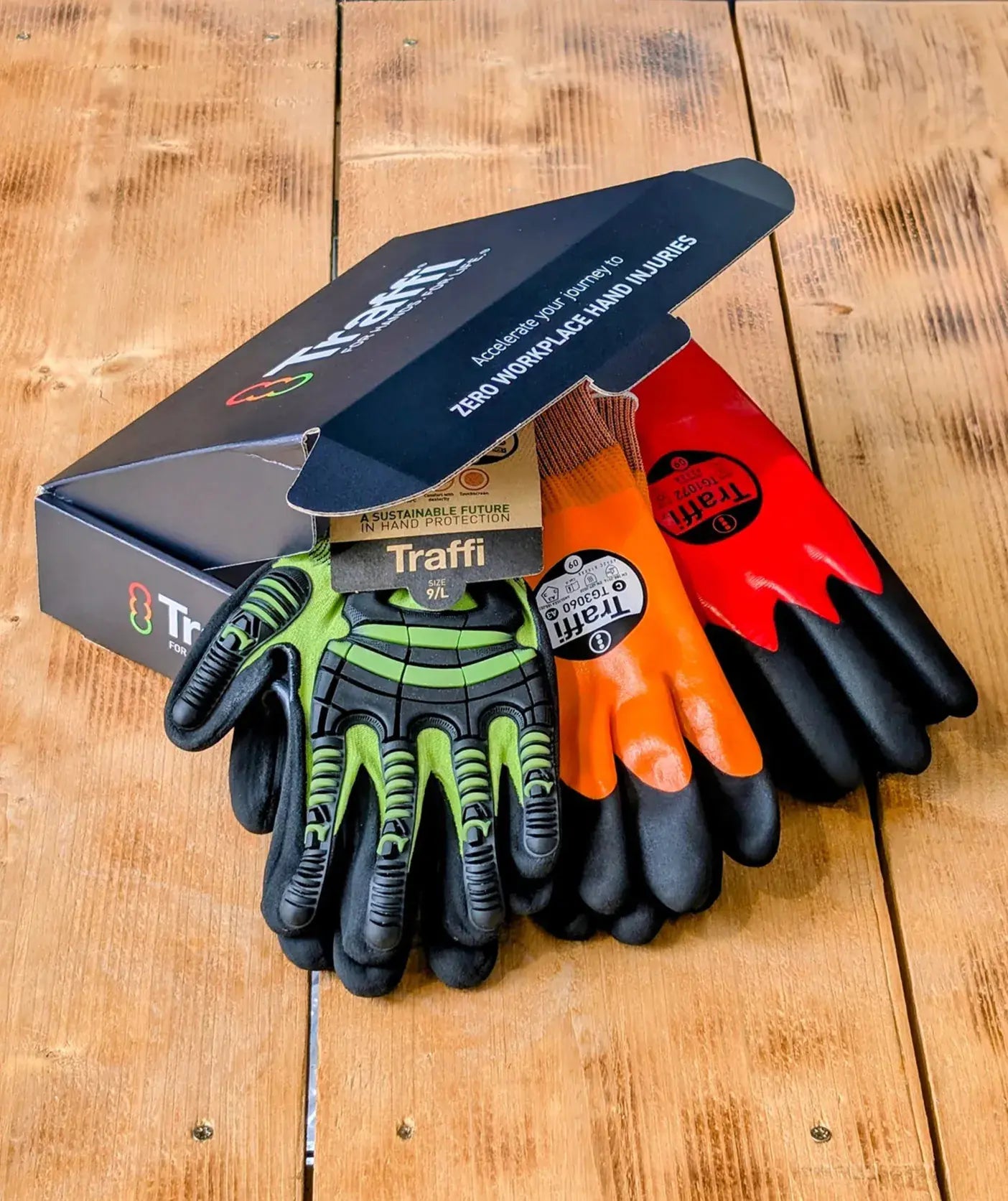
Once you have identified which products are best suited to you, we recommend carrying out one of our free trials. No one is better placed to provide input on the effectiveness of a work glove than those who use it every day. Inviting your workers to be a part of the decision-making process can also help promote overall buy-in to the hand protection programme.
5. CONSIDER SUSTAINABILITY
Gloves are often seen as a high usage, high wastage product.
At Traffi, we believe we are all responsible for the wellbeing of our planet and leaving a legacy for future generations that enables them and the planet to continue to flourish. This is why we are committed to embedding sustainability into our operations with goals focused on increasing recycled content and reducing energy, water, waste and carbon in our production, driving continuous improvements to reduce the environmental impact of our products.