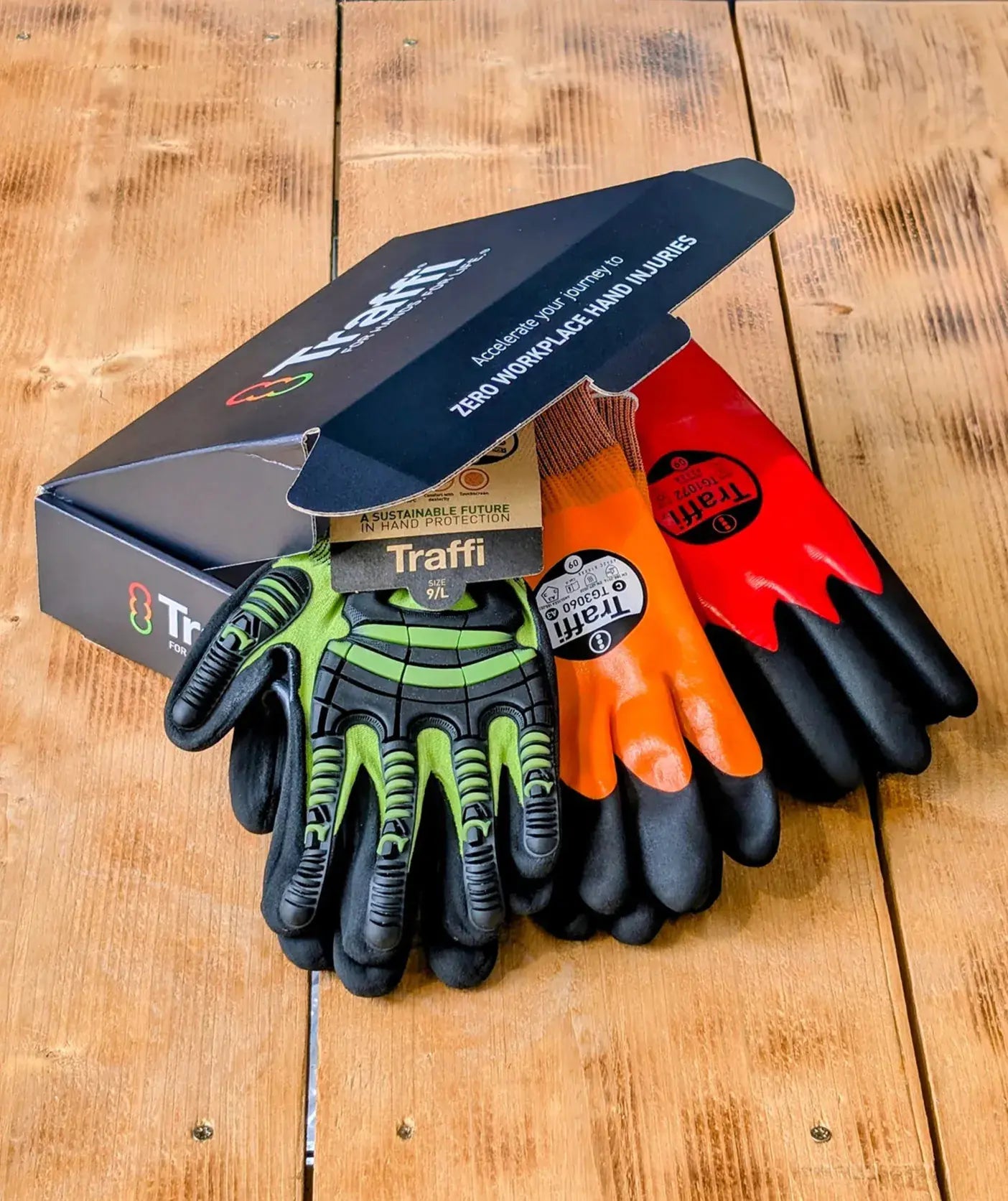
START WITH THE TASK
Look at what your teams are doing day to day: Handling materials with sharp edges Working with tools or equipment Carrying out repetitive handling tasks Each of these introduces different types of mechanical risk.

If you are responsible for safety, procurement, or product selection, you need to understand how glove protection is measured.
This knowledge hub helps you interpret work glove standards clearly, so you can connect protection ratings to real tasks, improve compliance, and make more confident decisions.
You can use this page to understand EN388 explained, compare protection levels, and apply standards correctly across your organisation.

For you, this means fewer assumptions, clearer specifications, and more consistent safety outcomes.
EN388 is the main standard used to test gloves against mechanical risks.
It covers
Abrasion resistance

Cut resistance

Tear resistance

Puncture resistance

You will see it displayed as a rating, for example: EN388: 4X43C
Each character represents a tested performance level. The purpose is simple: help you match the glove to the hazard, not just the product.
Cut resistance within EN388 is shown using a rating system that helps you understand how well a glove protects against cutting hazards. Rather than a single score, EN388 uses a graded scale to indicate different levels of cut protection.
Cut resistance is typically shown using a scale from A to F, where:
Each level reflects how much resistance the glove provides when exposed to a cutting force.

Different tasks involve different levels of risk.
For example:
Understanding this scale helps you match the glove to the level of risk, rather than selecting protection based on guesswork.
Cut resistance is one part of the overall EN388 rating, so it should always be considered alongside abrasion, tear, and puncture performance.

Understanding EN388 ratings is only useful if you can apply them to real working conditions. The right glove is the one that matches both the level of risk and the way the task is carried out.
Look at what your teams are doing day to day: Handling materials with sharp edges Working with tools or equipment Carrying out repetitive handling tasks Each of these introduces different types of mechanical risk.
Use the EN388 rating to identify the level of protection required: Higher cut levels for tasks involving sharp materials Strong abrasion resistance for repetitive handling Higher puncture resistance where there is a risk of penetration This helps ensure protection reflects the actual hazards involved.
A glove also needs to work in practice. That means considering: Dexterity for handling and precision work Comfort for extended wear Durability across repeated use A glove that meets the standard but isn’t worn consistently will not provide effective protection.
EN388 provides a recognised way to assess how gloves perform against common mechanical risks, giving you a consistent standard to work from when selecting hand protection.
In practice, this helps you:
For organisations responsible for workplace safety, using EN388-rated gloves supports a more structured approach to managing risk. It also helps ensure that decisions are based on measurable performance, making it easier to review, compare, and improve hand protection over time.
EN388 should always be used as part of a wider safety approach, where risks are identified, protection is selected accordingly, and gloves are tested in real working conditions.

Understanding protection standards like EN388 is an important part of selecting the right gloves, but applying them correctly in real environments is just as important.
At Traffi, we support this by helping you interpret protection ratings and relate them to the tasks your teams carry out.
This includes:
This approach helps ensure that EN388 ratings are used as part of a practical decision-making process, not just a technical reference.


Understanding EN388 ratings is the first step. Applying them in the context of your own tasks and risks is what makes them effective. Reviewing how gloves perform in your environment, comparing protection levels, and testing products in real conditions helps ensure the right level of protection is in place.
If you’re assessing your current glove use or selecting new products, you can explore the range, review technical information, and take the next step.
Prefer to talk?
If you would rather discuss things directly, you can speak with our team.
Safety gloves are a type of personal protective equipment designed to protect your hands from workplace hazards such as cuts, chemicals, impact, heat, and contamination. Your hands are often the most exposed part of the body during manual work, so selecting the right gloves plays a key role in reducing injuries, supporting safer working practices, and helping you carry out tasks effectively without compromising protection.
Safety gloves are a type of personal protective equipment designed to protect your hands from workplace hazards such as cuts, chemicals, impact, heat, and contamination. Your hands are often the most exposed part of the body during manual work, so selecting the right gloves plays a key role in reducing injuries, supporting safer working practices, and helping you carry out tasks effectively without compromising protection.
Safety gloves are a type of personal protective equipment designed to protect your hands from workplace hazards such as cuts, chemicals, impact, heat, and contamination. Your hands are often the most exposed part of the body during manual work, so selecting the right gloves plays a key role in reducing injuries, supporting safer working practices, and helping you carry out tasks effectively without compromising protection.
Safety gloves are a type of personal protective equipment designed to protect your hands from workplace hazards such as cuts, chemicals, impact, heat, and contamination. Your hands are often the most exposed part of the body during manual work, so selecting the right gloves plays a key role in reducing injuries, supporting safer working practices, and helping you carry out tasks effectively without compromising protection.
Safety gloves are a type of personal protective equipment designed to protect your hands from workplace hazards such as cuts, chemicals, impact, heat, and contamination. Your hands are often the most exposed part of the body during manual work, so selecting the right gloves plays a key role in reducing injuries, supporting safer working practices, and helping you carry out tasks effectively without compromising protection.
Safety gloves are a type of personal protective equipment designed to protect your hands from workplace hazards such as cuts, chemicals, impact, heat, and contamination. Your hands are often the most exposed part of the body during manual work, so selecting the right gloves plays a key role in reducing injuries, supporting safer working practices, and helping you carry out tasks effectively without compromising protection.
Safety gloves are a type of personal protective equipment designed to protect your hands from workplace hazards such as cuts, chemicals, impact, heat, and contamination. Your hands are often the most exposed part of the body during manual work, so selecting the right gloves plays a key role in reducing injuries, supporting safer working practices, and helping you carry out tasks effectively without compromising protection.
Safety gloves are a type of personal protective equipment designed to protect your hands from workplace hazards such as cuts, chemicals, impact, heat, and contamination. Your hands are often the most exposed part of the body during manual work, so selecting the right gloves plays a key role in reducing injuries, supporting safer working practices, and helping you carry out tasks effectively without compromising protection.
Safety gloves are a type of personal protective equipment designed to protect your hands from workplace hazards such as cuts, chemicals, impact, heat, and contamination. Your hands are often the most exposed part of the body during manual work, so selecting the right gloves plays a key role in reducing injuries, supporting safer working practices, and helping you carry out tasks effectively without compromising protection.
Safety gloves are a type of personal protective equipment designed to protect your hands from workplace hazards such as cuts, chemicals, impact, heat, and contamination. Your hands are often the most exposed part of the body during manual work, so selecting the right gloves plays a key role in reducing injuries, supporting safer working practices, and helping you carry out tasks effectively without compromising protection.